

Air Conditioning and Heat Pumps in a Conservatory: What Works and What’s Allowed
- 21 Sep 2026|
- News|
- Posted by Paul Davies
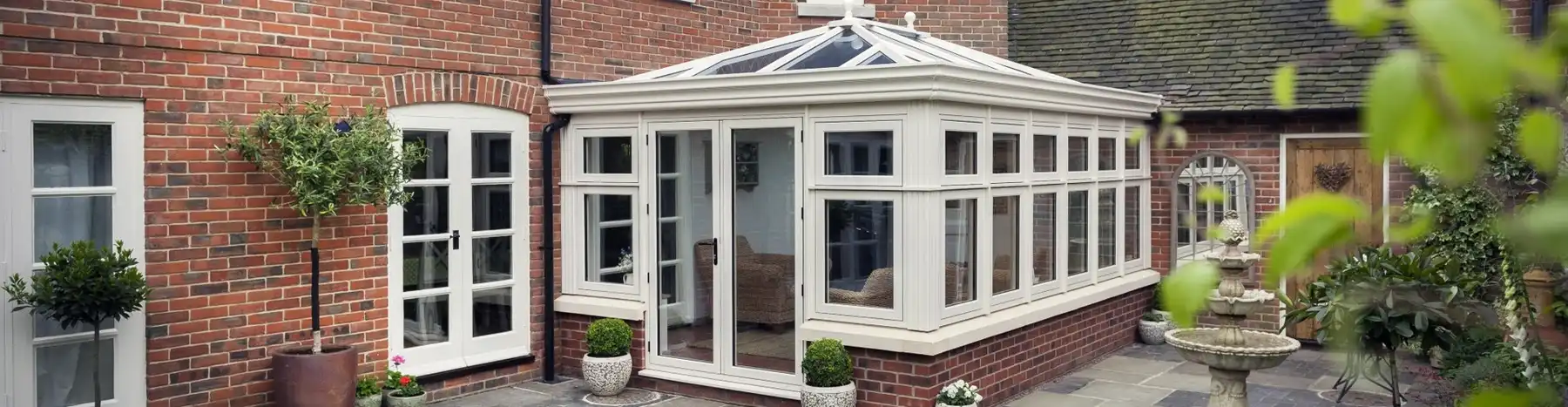
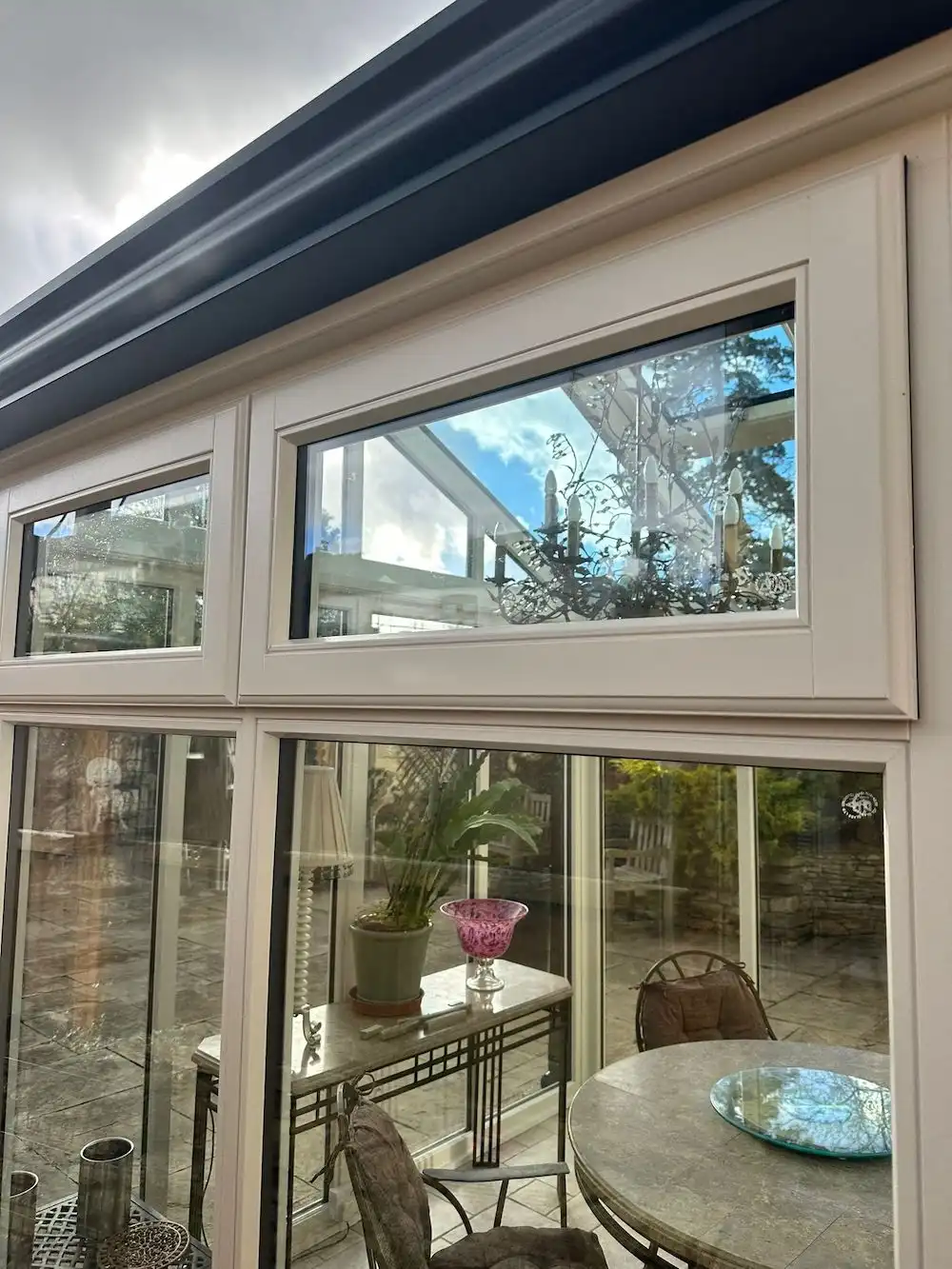
If you’ve ever sat in a conservatory on a warm afternoon and felt like you were in a sauna rather than a living room, you already understand the problem. Conservatories are built to let in as much natural light as possible, which is exactly what makes them so hard to keep comfortable. The same glass and polycarbonate roofs that flood the room with sunlight in April can turn it into an oven by July, and allow it to turn into an icebox in January.
Homeowners across Cheltenham, Cirencester, Stroud and the wider Gloucestershire area regularly ask us the same question: can you actually fit air conditioning or a heat pump in a conservatory, and is it even allowed? The short answer is yes, in most cases, but conservatory air conditioning needs a slightly different approach to the rest of the house.
This guide covers how heat pumps compare with traditional air conditioning, what planning and building regulations actually require, and how simple additions like roof vents and thermostats can make any mechanical system work more efficiently for less money.

Why a conservatory heats up (and cools down) faster than the rest of your home
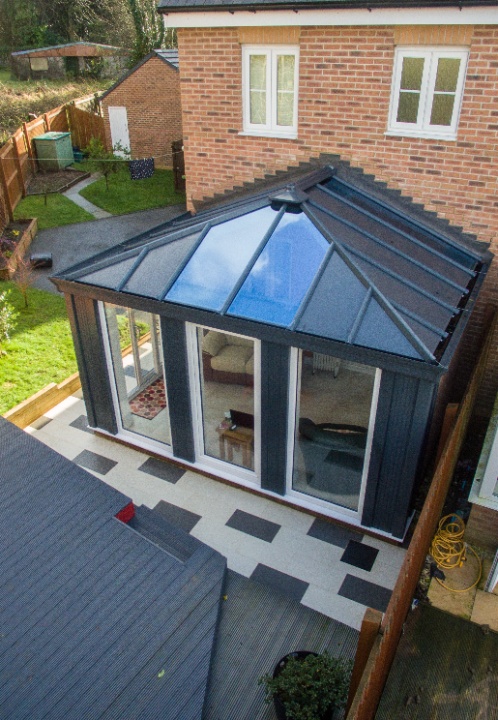
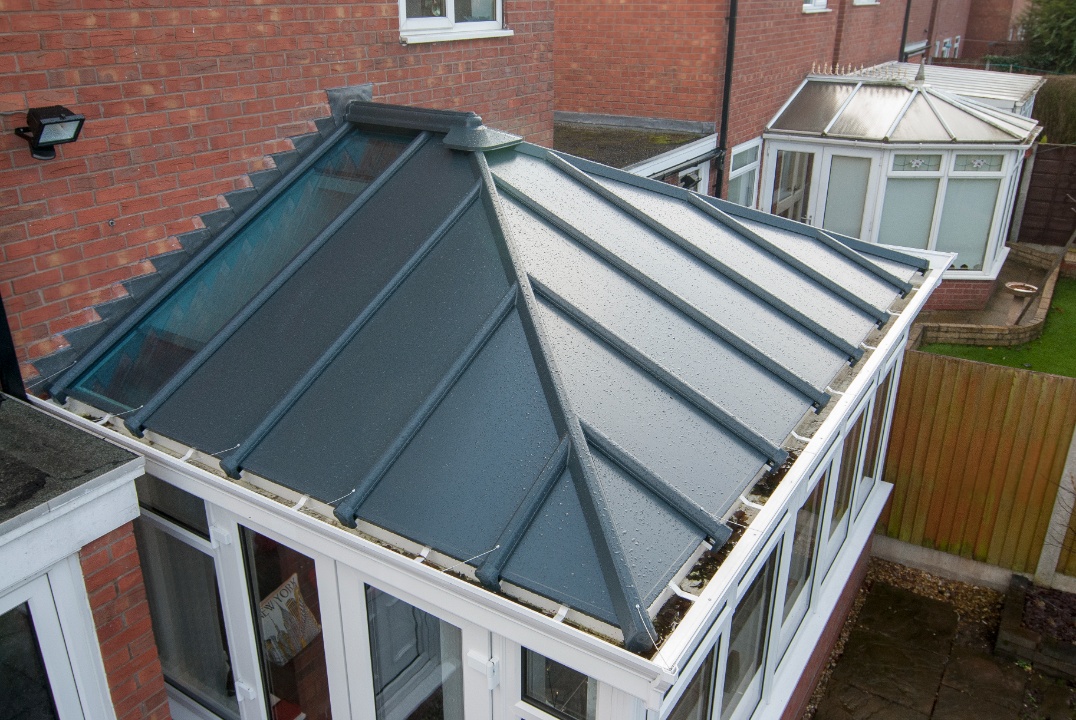
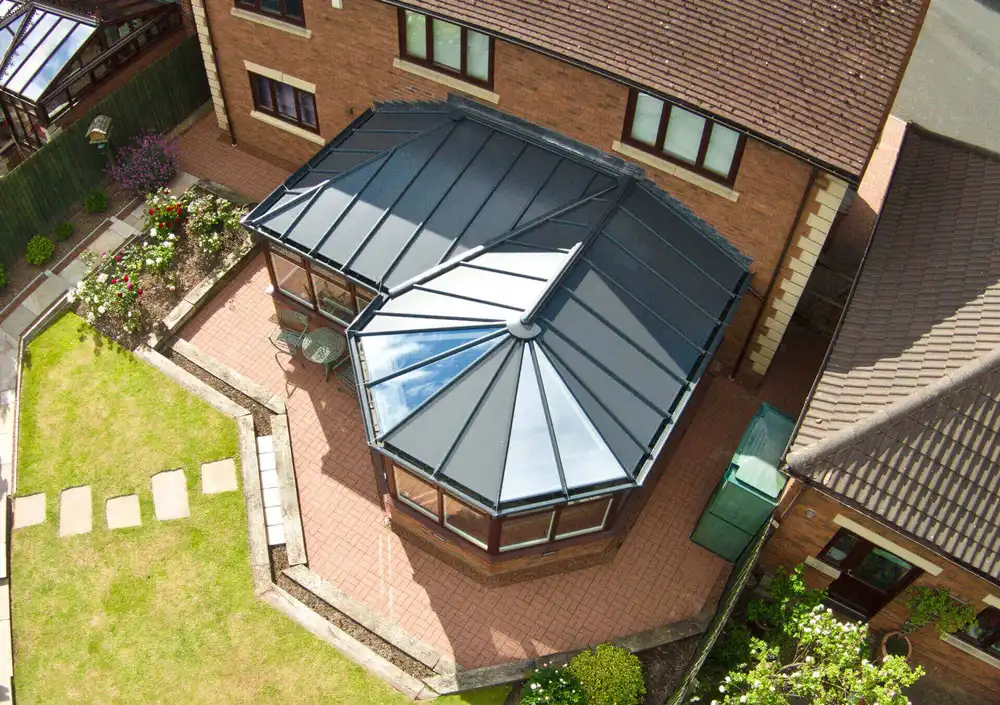
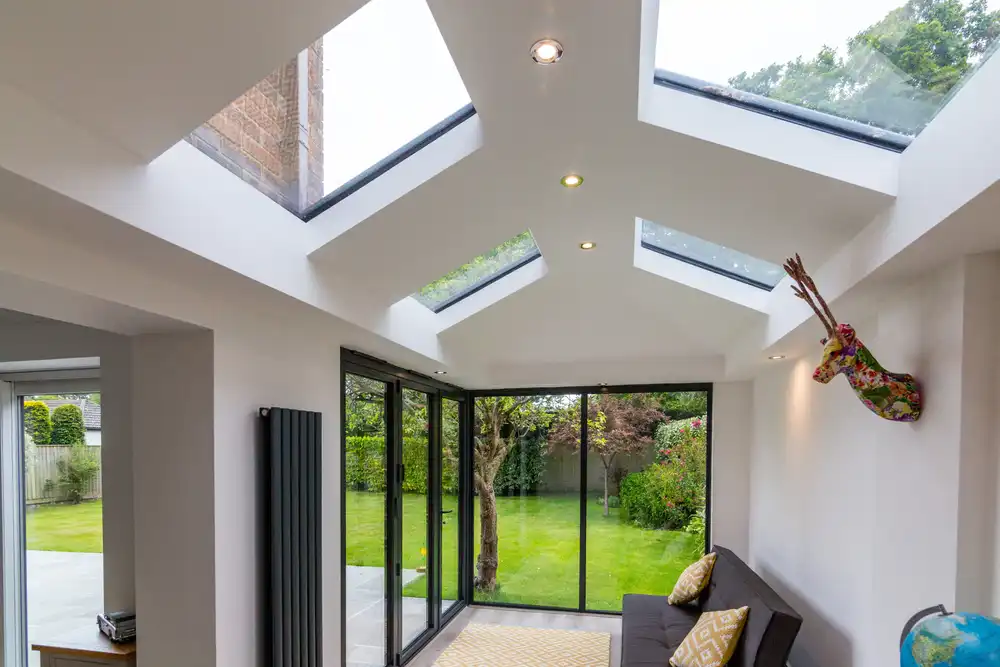
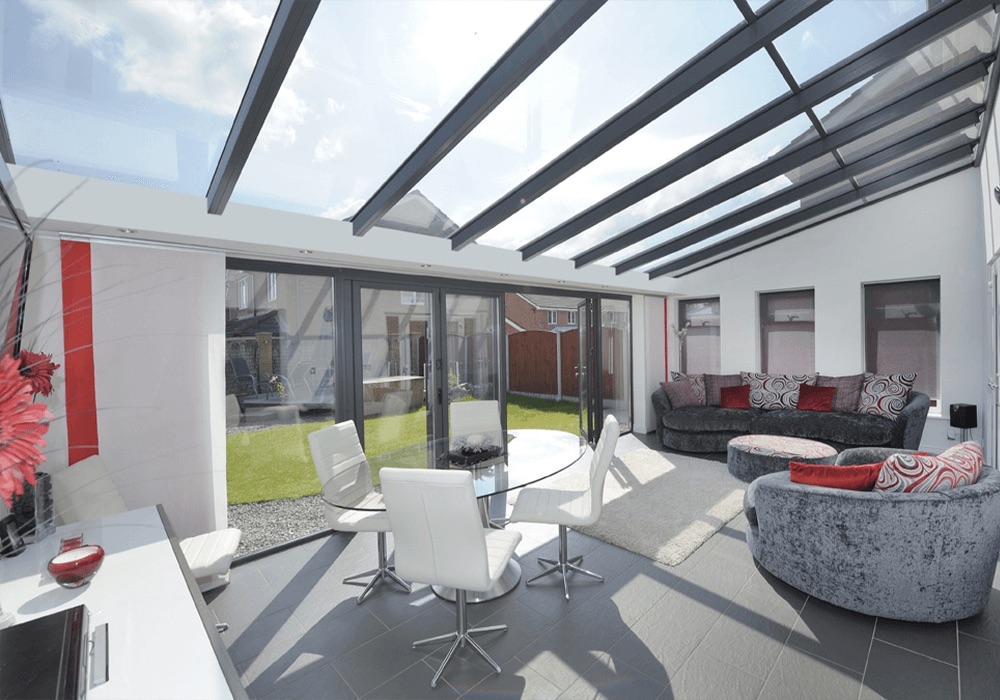
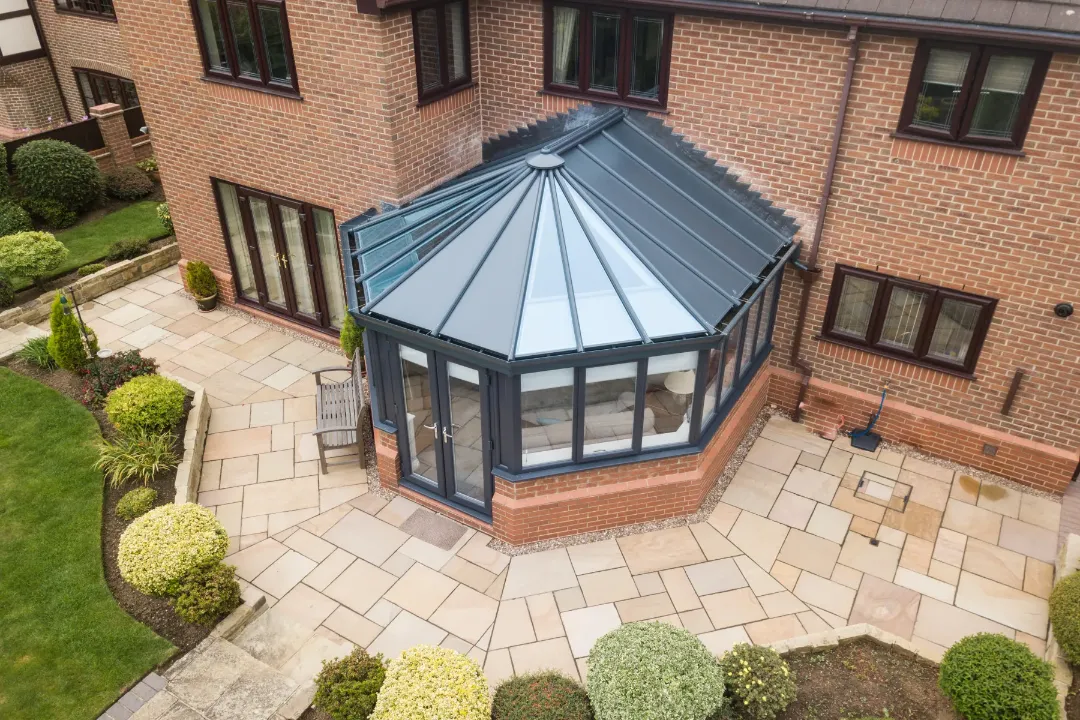
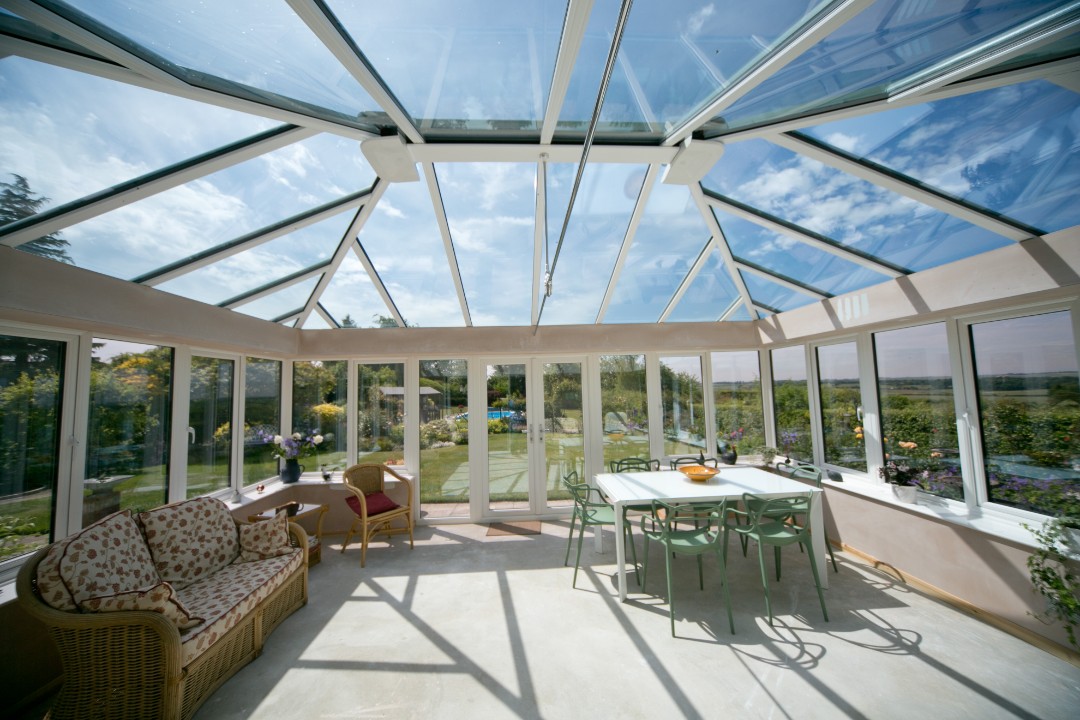
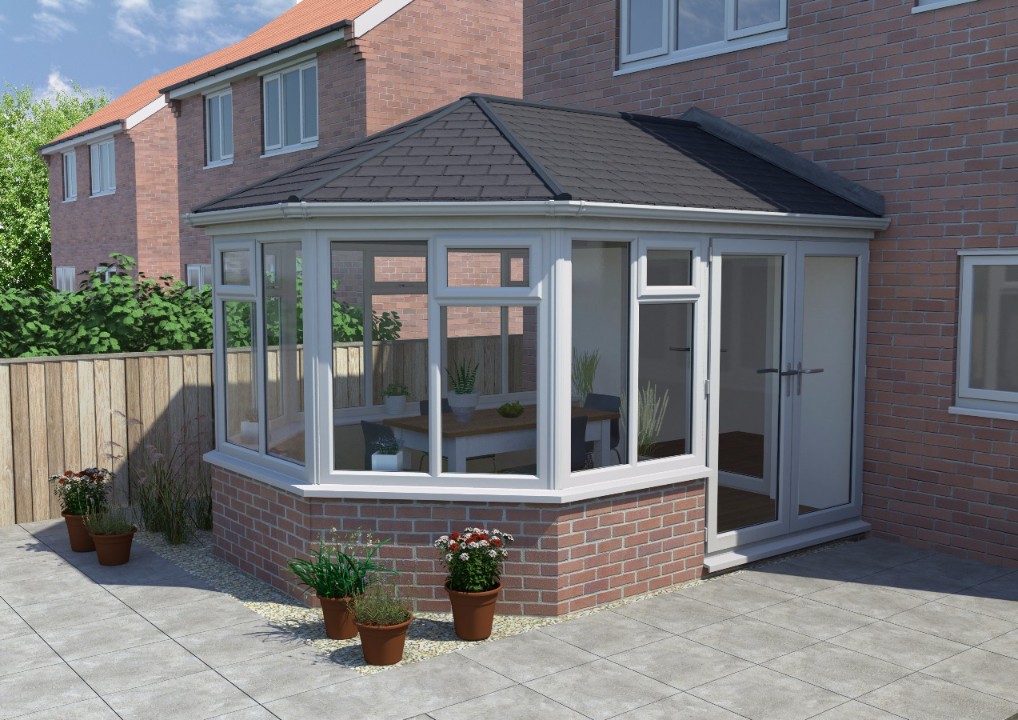
A conservatory behaves differently from a normal room because of one simple fact: it has far more glazed roof area relative to its size than a brick-built extension does. Sunlight passes through the large areas of glass or polycarbonate roof, warms the surfaces inside, and that warmth radiates back into the room faster than it can escape. This is the greenhouse effect, and it’s the reason a conservatory can be 10 to 15°C warmer than the rest of the house on a sunny day, even with the windows open.
The same structure works against you in winter. Single-layer polycarbonate roofs and older glazing units lose heat quickly once the sun goes down, which is why so many conservatories end up as summer-only rooms that nobody uses between October and March. For homeowners trying to turn a conservatory into proper usable space, whether that’s a second living room, a home office or a playroom, managing how to keep a conservatory cool in summer and reduce heat loss in winter has to be part of the plan, not an afterthought.
This is also why conservatory air conditioning needs proper professional installation and correct sizing. A cooling system designed for a standard living room, sized on square footage alone, will typically undersize a conservatory’s actual heat load once the extra sunlight and glazing are taken into account.
Heat pump or air conditioner: what’s the real difference?
For most homeowners, the choice comes down to two options: a dedicated air conditioning unit, or an air-to-air heat pump.
In practice, these are closely related pieces of kit. Both work by moving heat rather than generating it, using a refrigerant cycle to transfer warm air out of the room in summer. A traditional air conditioner is generally built and marketed for cooling only, or with basic reverse-cycle heating as a secondary feature. A modern air-to-air heat pump is designed to do both jobs properly, cooling the room in summer and providing efficient background heating in winter, which makes it a more practical long-term option for a conservatory that struggles with heat loss as much as heat gain.
The main advantages of a heat pump over a traditional AC unit are:
- Energy efficiency: A heat pump typically delivers three to four times more heat energy than the electricity it consumes, because it’s moving existing warmth rather than creating it from scratch. That efficiency also applies in cooling mode, which keeps running costs down compared with a resistive electric heater or a cooling-only unit run all summer.
- Year-round use: Rather than installing an AC unit for summer, and a separate heater for winter, one system handles both, which usually works out cheaper to buy and install than two separate systems.
- Quieter modern units: Current generation wall-mounted and multi-split heat pumps run considerably quieter than older air conditioning units, which matters in a room that’s often positioned close to a garden or neighbouring property.
Portable air conditioners are worth mentioning too, because they’re a genuinely sensible option for occasional use. If a conservatory only gets uncomfortably warm on a handful of days a year, a portable unit avoids the cost of a fixed installation altogether. The trade-off is that portable units are noisier, less efficient and less effective at controlling humidity than a fixed system, so they suit occasional use rather than a conservatory you want to rely on as usable space throughout the year.
What you’re actually allowed to install without planning permission
This is where most of the confusion comes from, and the rules changed significantly in 2025.
Air conditioning and heat pump installations in England fall under Class G of the General Permitted Development Order. The Planning Portal’s guidance on air source heat pumps confirms that most homeowners can install a unit without a planning application, provided it meets a set of conditions:
- The outdoor compressor unit must not exceed 5 cubic metres in volume for a house (this limit was raised from 0.6 cubic metres in the May 2025 update).
- Detached houses can now have up to two units installed under permitted development; semi-detached, terraced and other non-detached properties are limited to one.
- The unit cannot be placed on a pitched roof, and if it’s on a flat roof, it must sit at least 1 metre from the edge.
- It cannot be mounted on a wall above ground-floor level if that wall faces a highway.
- The installation must comply with the Microgeneration Certification Scheme’s MCS 020a planning standard, which sets noise limits to protect neighbours.
Since May 2025, this also covers reversible air-to-air heat pumps that provide cooling as well as heating, which brought most modern conservatory air conditioning installations inside the same permitted development framework as traditional heat pumps. The one-metre boundary rule that used to restrict where units could be sited has also been removed, giving homeowners considerably more flexibility over placement.
The rules tighten if your property is listed, sits within a conservation area, or is a flat rather than a house. In those cases, planning permission is likely to be required regardless of unit size, and listed buildings will also need listed building consent for any external alteration. If you’re at all unsure, a Lawful Development Certificate from your local council costs around £100 to £200 and gives you a formal, legally reliable answer, which is worth having if you plan to sell the property in future.
Whatever system you choose, the electrical work needs to be Part P compliant, and any installer handling refrigerant must hold F-Gas certification. A reputable installer will handle both as standard, but it’s worth asking to see certification before work begins, particularly for a fixed AC unit or heat pump rather than a simple portable unit.
Roof vents and thermostats: the low-cost solutions that do more than you’d think
Roof vents
Mechanical cooling and heating work far better, and far more cheaply to run, when they’re not fighting against a room that’s poorly ventilated. Roof vents are one of the simplest and most cost-effective upgrades available for a conservatory, because hot air naturally rises and collects at roof level. A well-positioned roof vent, whether manual or automated, can significantly improve air quality by letting that trapped hot air escape before it builds up into the kind of stifling heat that makes a room unusable on a warm afternoon.
Thermostats
Pairing roof vents with a smart thermostat gives you genuine climate control rather than a system running flat out regardless of conditions. A thermostat that responds to actual room temperature, rather than running on a fixed timer, prevents a heat pump or AC unit from working harder than it needs to once the room has reached a comfortable temperature, or from cutting out too early when direct sunlight through the roof keeps adding heat gain through the afternoon.
Specialist glass coatings
For older or smaller conservatories in particular, reflective glass or specialist coatings on the roof glazing can meaningfully cut the amount of solar heat entering the room in the first place, reducing the load on your air conditioning or heat pump.
Choosing the right system for year-round comfort
The right approach depends on how you actually want to use the conservatory. For a conservatory used occasionally in summer, roof vents, reflective glazing and a portable air conditioner may be perfectly adequate, and considerably cheaper than a fixed installation.
For a conservatory you want to use as genuine living space year-round, whether as a second living room, dining room or home office, a properly sized heat pump paired with good ventilation and a smart thermostat is generally the better long-term investment, since it handles both the summer heat gain and the winter heat loss that make so many conservatories unusable for half the year.
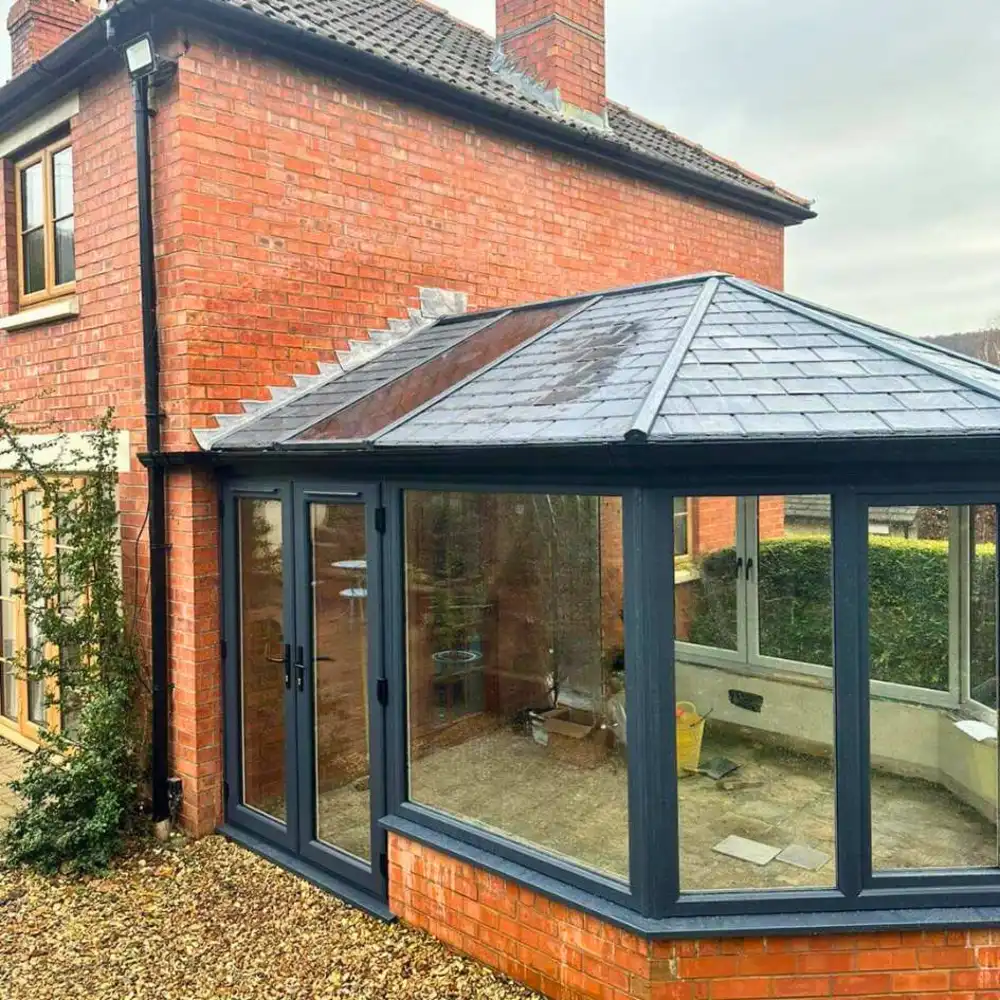
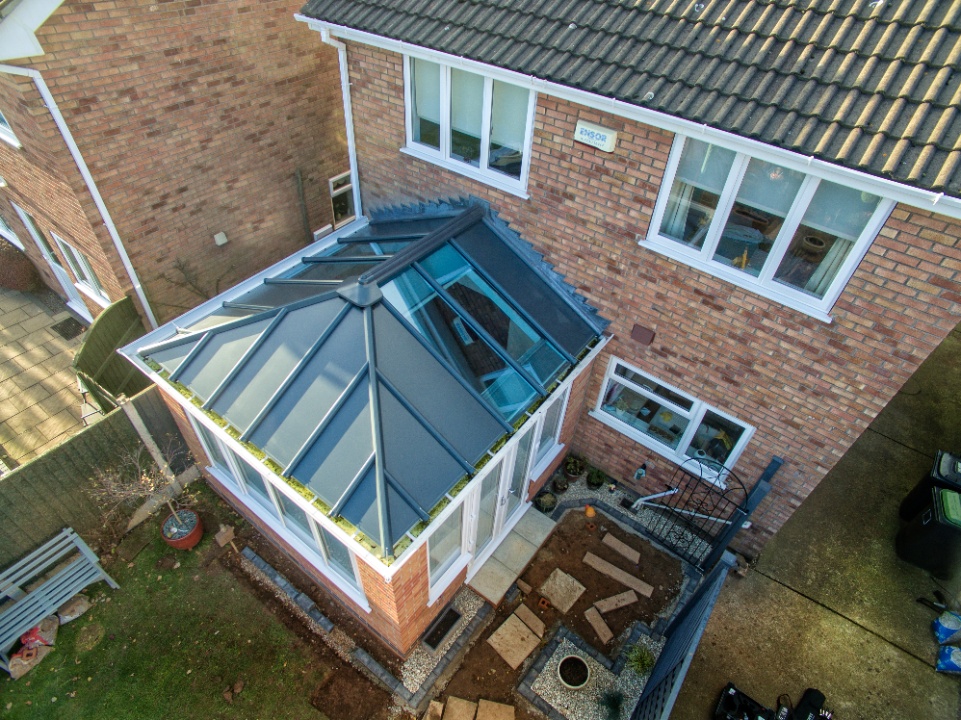
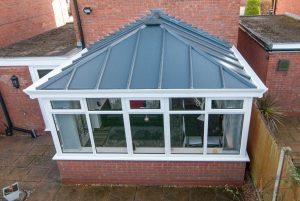
Roof condition matters here too. If your existing polycarbonate or single-glazed roof is the main source of both heat gain and heat loss at the hottest points of the day, no amount of mechanical cooling or heating will fully solve the underlying problem. In many cases, roof upgrades to a modern insulated or hybrid roof, of the kind we install and advise on regularly, will do more for year-round comfort than any air conditioning system on its own, and can reduce the size and running cost of whatever heating or cooling system you eventually choose.
At The Little Conservatory Company, we’ve spent decades helping homeowners across Gloucestershire turn underused conservatories into genuinely comfortable, usable rooms. Every recommendation we make, whether that’s a roof upgrade, ventilation improvements or advice on the right heat pump for your specific room, starts with understanding how your particular conservatory behaves through the seasons, not a generic answer that ignores the direct sunlight, roof type and orientation specific to your home.
Talk to us about your conservatory’s specific needs
If your conservatory is too hot in summer, too cold in winter, or simply isn’t getting used the way you hoped it would, we’d be glad to talk through the right combination of roof upgrades, ventilation and heating or cooling for your home.
- Fill in our online contact form
- Call us on: 01242 681207
- Email us at: info@littlecc.com