

Best Timber For Sash Windows: Which Species Performs Best in UK Weather?
- 7 Jul 2026|
- News|
- Posted by Paul Davies
If you’re considering timber sash windows, one of the first questions you’ll face is: which wood should I choose? The answer matters more than you might think. The right timber can last a lifetime. The wrong choice could mean warping, decay, and expensive repairs within a decade.
This guide breaks down the best timber for sash windows in the UK climate, comparing species on durability, maintenance, thermal efficiency, and cost. Whether you’re restoring Victorian sash windows, replacing Edwardian originals, or upgrading a modern property, this article will help you make a confident, informed decision.
Why timber choice matters for sash windows in the UK
The UK climate is tough on timber. High rainfall, humidity, frost, and temperature swings throughout the year create a specific set of challenges for sash windows:
- Moisture absorption causes swelling and can lead to sticking sashes or failed seals
- Warping distorts frames and affects how the window closes
- Decay can develop in poorly maintained or inadequately treated softwood
- Draughts creep in when frames shrink or warp away from their housing
Choosing the right timber species reduces these risks significantly. Pairing that with quality glazing, correct finishing, and professional installation makes all the difference.
The main types of timber used for sash windows
Softwood: the traditional choice
Softwood is the most historically common material for wooden sash windows in the UK. Georgian sash windows and Victorian sash windows were almost always made from softwood, typically European redwood or radiata pine.
Pros:
- Affordable and widely available
- Easy to work with, so joinery is precise
- Accepts paint well
- Authentic appearance for period properties
Cons:
- More susceptible to moisture, swelling, and decay than hardwood
- Requires regular maintenance, repainting every 5 to 7 years
- Lower natural durability rating
Softwood windows can perform well in UK weather when properly treated and maintained. The key is using a high-quality preservative primer and keeping on top of repainting cycles. Always look for FSC certified timber, which confirms the wood has been responsibly sourced.
Best for: Period restorations, conservation areas, budget-conscious projects.
Hardwood: greater durability, higher cost
Hardwood species offer greater natural resistance to moisture and decay, making them a strong option for UK sash windows. The trade-off is cost: hardwood is more expensive than softwood and more demanding to work with.
Oak
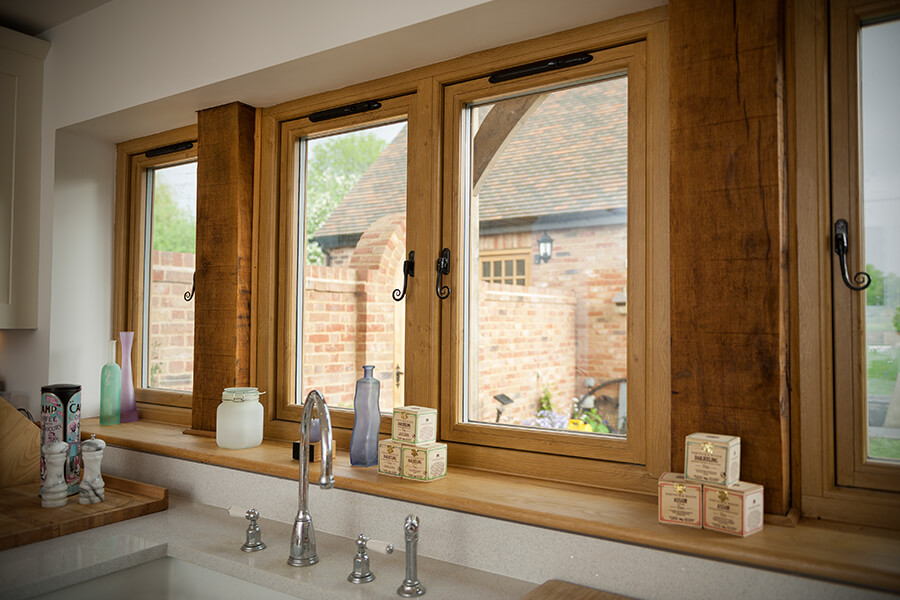
Oak is one of the most recognised hardwoods for heritage joinery in the UK. It is dense, durable, and carries a natural beauty that suits traditional architecture. For Georgian sash windows, Edwardian properties, or listed buildings, oak is an excellent match. Keep in mind that it is slower growing, which contributes to its higher cost, and its weight requires careful specification of the spiral balance mechanism.
Sapele
Sapele has grown in popularity as a mahogany substitute. It has a rich, red-brown tone and a distinctive grain. It offers good durability and performs well in UK weather with correct treatment, balancing aesthetics and affordability more favourably than oak.
Best for: Both period and contemporary properties where hardwood performance is a priority.
Accoya: the high-performance modified wood
Accoya is a modified wood product that has transformed the timber window market. Produced through a process called acetylation, it is chemically treated to repel moisture at a cellular level.
- Rated Class 1 for durability, the highest classification available
- Resists swelling, warping, and decay even in prolonged wet conditions
- FSC certified and responsibly sourced
- Carries a 50-year above-ground guarantee
- Accepts paint and stain exceptionally well
For sash windows in the UK climate, Accoya is widely considered the premium choice. It costs more upfront, but its longevity and low maintenance requirements make it a sound long-term investment.
Best for: Homeowners who want the highest quality performance with minimal upkeep.
Comparing timber species: which is right for you?
Not sure which type of wood suits your project? Here is a quick summary of how each species compares.
Softwood is the most affordable option and works well for period restorations. It has moderate durability but requires more frequent maintenance than hardwood alternatives.
Oak is a high-durability hardwood with a rich, natural appearance. It is best suited to heritage properties and listed buildings, with moderate maintenance but a higher price point.
Sapele sits in the middle ground, offering high durability and a striking grain at a slightly lower cost than oak. It works well in both contemporary and traditional homes.
Accoya is the premium choice, with very high durability, low maintenance, and exceptional resistance to the UK climate. The upfront cost is higher, but its longevity makes it one of the most cost-effective options over time.
In short:
- Choose softwood if budget and period authenticity are your priorities
- Choose oak if you have a heritage property and want a classic hardwood
- Choose sapele if you want hardwood performance at a slightly lower cost than oak
- Choose Accoya if long-term durability and minimal maintenance matter most
What about double glazing in timber sash windows?
Modern timber sash windows can accommodate double glazing, which is a significant advantage over older single-glazed wooden sash windows notorious for draughts and heat loss.
Double glazing improves:
- Thermal efficiency, reducing heating bills
- Sound insulation
- Draught prevention
- Condensation management
The glazing unit width does affect the overall sash profile, so it is important to work with experienced joiners who understand how to balance the aesthetics of the frame with the performance of the glass unit. At The Little Conservatory Company, we specify high-performance glazing as standard across our timber window range.
FAQs: timber sash windows
What is the best timber for sash windows in the UK?
Accoya is widely regarded as the top performer due to its resistance to moisture, warping, and decay. For period properties, softwood or oak may be more appropriate. The best choice depends on your budget, property type, and maintenance preferences.
Is softwood actually softer than hardwood?
Not always. The terms softwood and hardwood refer to the type of tree the timber comes from, not its physical hardness. Softwood comes from coniferous trees, such as pine, while hardwood comes from deciduous trees, such as oak or sapele. In fact, some softwoods are harder than certain hardwoods. Balsa wood, for example, is classified as a hardwood despite being one of the lightest and softest woods available. For windows, the distinction matters less than the timber’s durability, stability, and how well it handles moisture.
Do timber sash windows need a lot of maintenance?
Softwood windows need repainting every 5 to 7 years. Hardwood and Accoya windows require less frequent attention. Correct finishing at installation makes a significant difference to long-term maintenance needs.
Can you get double glazing in sash windows?
Yes. Modern timber sash windows can be made with double glazing units, improving thermal efficiency and reducing draughts considerably compared to older single-glazed wooden sash windows.
Is Accoya worth the extra cost?
For homeowners who want durability and low maintenance, yes. Accoya’s acetylation process gives it Class 1 durability and a 50-year above-ground guarantee. Reduced maintenance costs over time can offset the higher upfront price.
Do I need planning permission for timber sash windows?
Not usually. However, if your property is listed or in a conservation area, you may need approval. Our team can guide you through the process and ensure your windows meet local guidelines.
What is a spiral balance in a sash window?
A spiral balance is the mechanism that supports the sash and allows it to slide smoothly. Heavier hardwood sashes require carefully specified balances to ensure smooth, reliable operation.
TL;DR: choosing the best timber for sash windows
- Softwood is affordable and traditional but needs regular maintenance
- Oak is durable and beautiful but comes at a higher cost
- Sapele is a practical hardwood that balances performance and affordability
- Accoya offers the highest durability and lowest maintenance of all timber options
- Double glazing can be fitted in timber sash windows for improved thermal performance
- Always look for FSC certified timber
- Work with experienced installers who understand UK building regulations
Get in touch with The Little Conservatory Company
Choosing the right timber for your sash windows is a decision worth getting right. Our team at The Little Conservatory Company is here to help you through every stage, from initial specification to final installation.
We work with homeowners across Gloucestershire, Cheltenham, Cirencester, Stroud, the Cotswolds, and beyond. Whether you are planning a full window replacement, a period restoration, or simply exploring your options, we would love to hear from you.
Get a free quote or discuss your project today. Complete our online contact form, call us on 01242 681207 or email info@littlecc.com .
Our friendly team will talk through your requirements, answer your questions, and help you find the right timber window solution for your home.